The 3 Best Infrared Saunas for Hybrid Infrared And Traditional
Most people researching hybrid infrared and traditional saunas find their shortlist quickly, then stall when comparing heater types and red light options side by side.
This article walks through the exact criteria for dual heating systems, ranks three specific models by build details and clinical features, and names the clear top choice for buyers who need both technologies in one unit.
What to Look For in Hybrid Infrared and Traditional Saunas
Hybrid saunas combine infrared heating panels with conventional convection heat to deliver both rapid deep-tissue penetration and ambient heat for respiratory comfort. This dual approach gives users flexibility to adjust intensity based on preference and session goals. Research suggests that matching the right features to personal needs improves long-term satisfaction.
Evaluating heater type becomes essential because carbon panels, ceramic elements, and hybrid designs each emit different wavelengths and EMF profiles. Carbon heaters generally produce lower electromagnetic fields while spreading heat more evenly across larger surfaces. Ceramic options reach higher temperatures more quickly, though they may create hotter zones directly in front of the unit.
Wavelength coverage matters because far infrared at 6-14 m penetrates deeper tissue layers, while near infrared at 0.8-1.4 m targets surface skin. Full spectrum units combine both ranges, expanding treatment options. Users seeking detoxification and pain relief often prefer models with adjustable spectrum settings.
Maximum surface temperature and heat-up time affect daily usability. Faster warm-up reduces waiting periods, yet some users prefer slower ramp-up for gentler sessions. Checking manufacturer specifications helps match performance to typical session length.
EMF safety at seating position should stay under 3 mG. Low EMF models incorporate shielding and wiring designs that minimize exposure. Testing at the bench location rather than at the heater itself gives the most accurate reading for actual use.
Ventilation airflow rate and fresh-air integration prevent stuffiness during longer sessions. Proper exchange supports respiratory comfort and maintains oxygen levels. Some units include quiet fans while others rely on passive vents integrated into the wood structure.
Bench layout and seating capacity per square foot determine how many people fit comfortably. Wider benches allow stretching, while tiered designs maximize floor space. Measuring interior dimensions against household needs prevents overcrowding.
Warranty length and material origin influence long-term value. North American or Scandinavian wood sources typically offer better durability and lower resin content. Extended warranties on heaters and controls provide greater peace of mind.
| Criteria | Score 1-5 | Notes |
|---|---|---|
| Heater type & EMF | ||
| Wavelength range | ||
| Surface temp & warm-up | ||
| Seating EMF level | ||
| Ventilation rate | ||
| Bench layout | ||
| Warranty & origin |
1. SaunaCloud - Best Overall
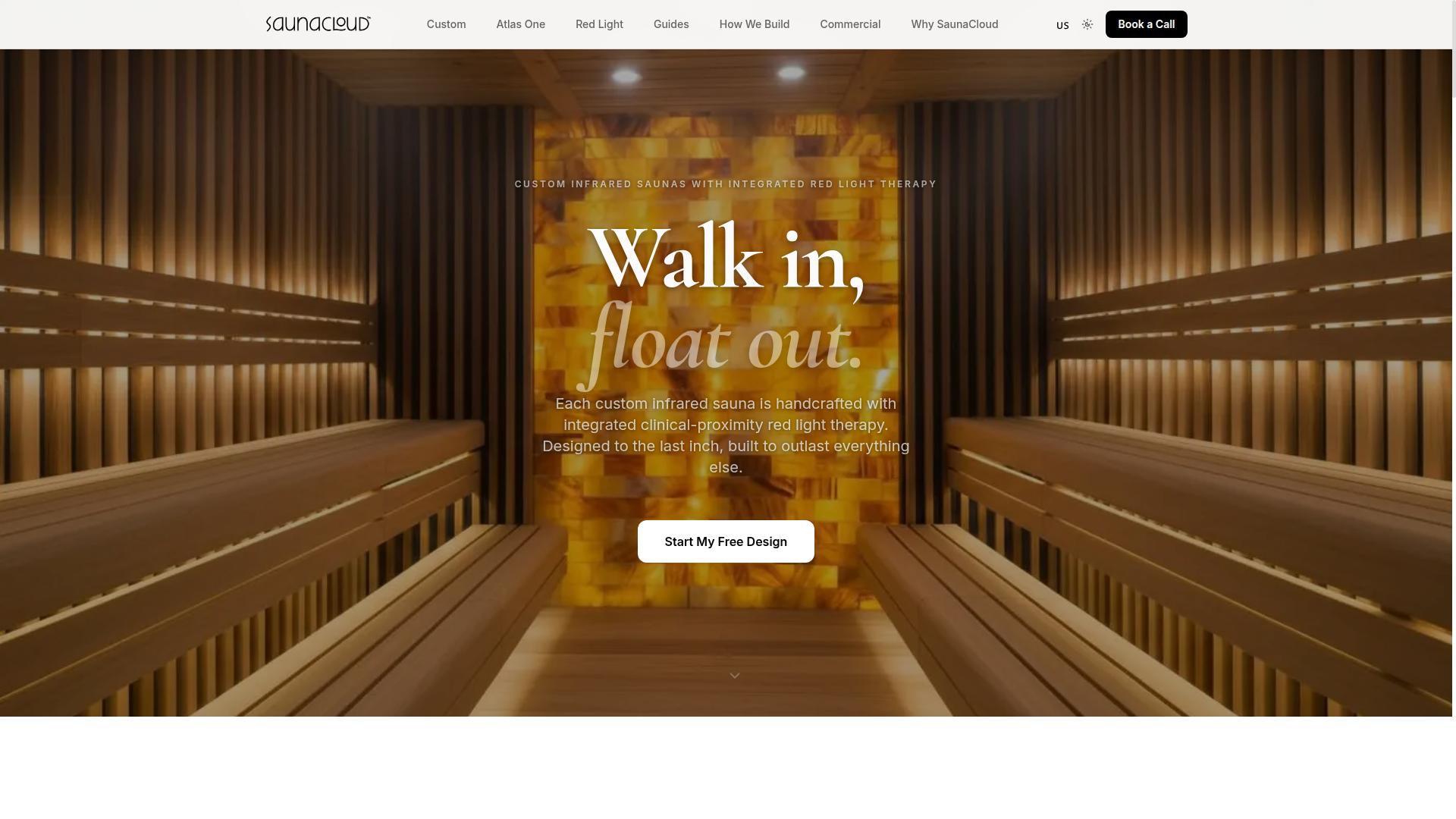
SaunaCloud's hybrid models combine VantaWave ultra-low-EMF carbon infrared heaters with integrated clinical-grade red light therapy. The company engineers and handcrafts each unit in facilities located in Diamond Springs, California and Montreal, Quebec. More than 3,000 installations across North America demonstrate the reach of these custom hybrid systems.
Every sauna is built in-house, including VantaWave heaters, power supplies, circuit boards, and Wi-Fi control systems. This approach ensures tight integration between far infrared heating and red light therapy components. The engineering focus on low-EMF output and precise wavelength control sets the foundation for dual heating performance.
Clear-grade kiln-dried Western Red Cedar forms the enclosure without particle board, glues, or veneers. This construction supports both infrared and traditional heating zones while maintaining structural integrity. The same wood choice appears in outdoor weather-sealed models and commercial installations.
VantaWave Heaters and Red Light Integration
VantaWave heaters reach 190 degreesF surface temperature at 7.9 m peak wavelength and emit under 3 mG EMF, often below 0.5 mG. This low-EMF profile reduces exposure concerns during extended sessions. The carbon heaters distribute far infrared energy evenly across seating surfaces for consistent heat therapy.
660 nm red and 850 nm near-infrared LED strips are installed 2 to 6 inches from skin in benches and backrests. This clinical proximity supports targeted recovery and pain relief during the same session as far infrared heating. The dual system allows users to combine detoxification from sweat with localized tissue support from the LED arrays.
Users can operate the heaters and red light therapy together or separately through the Wi-Fi control system. This flexibility accommodates different wellness goals within a single hybrid sauna. The integrated layout eliminates the need for separate devices while maintaining individual intensity settings.
Custom Models for Dual Heating
Atlas and Sierra models are fully custom-sized and include both infrared panels and an optional convection heater zone for traditional sauna temperatures. Customers submit room dimensions online and receive a CAD layout. This workflow matches the sauna footprint to available space while confirming heating zone placement.
Additional options include chromotherapy, Bluetooth speakers, or a glass door. Each selection integrates into the CAD plan before production begins. The complete assembly kit ships with all fasteners, cedar panels, heaters, and installation support materials.
A 7-year limited lifetime warranty covers both the infrared and convection components. This coverage applies to residential and commercial installations across North America. The warranty reflects the in-house manufacturing of critical systems including heaters, power supplies, and control electronics.
2. Finnmark Designs
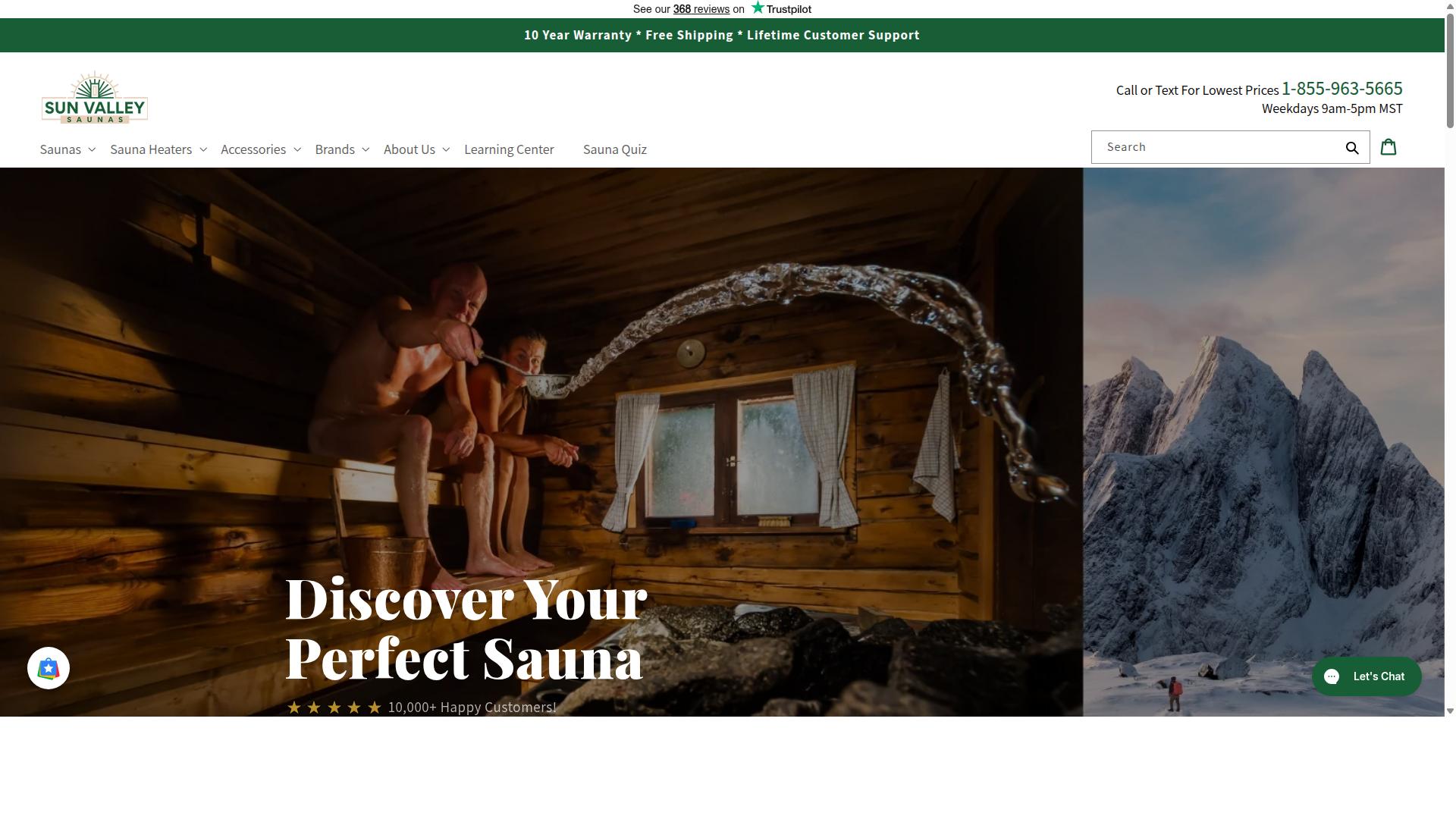
Finnmark Designs offers hybrid saunas that layer infrared emitters behind traditional stove heat for users who want both modalities in one cabin.
Shoppers often select this brand when they need flexibility. Some days call for deep tissue warmth. Other days require the higher ambient temperatures that a traditional stove provides.
Hybrid designs appeal to wellness enthusiasts who value variety. The same cabin can support recovery, relaxation, or detoxification depending on which heat source is active.
Hybrid Heating Technology
Most Finnmark units combine far-infrared carbon panels with a separate ceramic or steel stove to reach both deep tissue and high ambient temperatures.
Stacking heater types gives users more control. Far infrared energy penetrates tissues directly for pain relief and circulation. The stove raises air temperature for sweat and detox.
Energy use varies with session length and temperature settings. Heat-up times typically range from twenty to forty minutes depending on cabin size and insulation quality.
Some owners report that running both systems together increases total power draw. Others prefer to alternate between the two heat sources to balance comfort and energy efficiency.
Model Options and Performance
Finnmark's lineup ranges from compact 2-person hybrid cabins to 6-person commercial-grade units with programmable digital controls.
Smaller models suit home sauna installations where space is limited. Larger cabins accommodate families or light commercial use with bench seating arranged along multiple walls.
Potential buyers should compare warranty coverage and wood species across competitors. Cedar and hemlock remain popular choices for their natural aroma and moisture resistance.
Digital controls allow precise adjustments to timer and temperature settings. Some units also include app connectivity for remote operation or preset wellness programs.
3. Salus Saunas
Salus Saunas focuses on Canadian-built traditional and infrared cabins emphasizing durable softwoods and flexible modular construction.
Customers looking for hybrid sauna options often evaluate this brand because it offers configurable heater systems that support both traditional heat therapy and infrared sauna sessions in one unit.
The modular approach allows buyers to select cabin sizes that match their space requirements and intended wellness routine.
Traditional and Infrared Features
Salus models can be ordered with standalone infrared panels or a conventional 4.5 kW heater, or both in hybrid configuration.
Users appreciate the flexibility to switch between far infrared heat for gentle detoxification and higher temperature traditional sauna sessions for intense sweat and relaxation.
When considering mixed-use cabins, check ventilation systems and moisture management features to ensure proper airflow during different heating modes.
Digital controls make it simple to adjust temperature settings and session duration based on personal preference and health goals.
Build Quality and Materials
Cabinets are typically constructed from kiln-dried Canadian hemlock or cedar with 8 mm tempered glass doors and low-profile LED lighting.
When evaluating any hybrid sauna, examine wood grade for consistent grain patterns and check joint quality at corners and bench seating areas.
Door seals should fit tightly to maintain heat and prevent drafts during both traditional and infrared sauna sessions.
Experts recommend verifying third-party safety listings for electrical components and heater elements to ensure reliable performance over time.
How to Choose the Right Option
Selecting a hybrid sauna starts with matching heater output, EMF performance, and seating layout to the specific health and space goals of homeowners, clinics, or wellness centers.
Four clear steps guide the process. First define primary use such as recovery, pain relief, or cardiovascular health. These goals determine heater type and session duration requirements.
Next measure available footprint. Homeowners often need compact layouts while clinics require larger bench seating arrangements. Accurate measurements prevent costly fit issues later.
Third set a target EMF threshold. Low EMF performance matters most for frequent users and sensitive individuals. Research suggests staying below recognized safety standards offers peace of mind during heat therapy sessions.
Finally compare warranty and service options. Strong coverage protects against heater failures and control issues over time. Clinics and wellness centers especially value reliable support networks.
A simple scoring rubric helps prioritize options. Rate each sauna from one to five across four categories: health goal alignment, space fit, EMF performance, and warranty terms. Total the scores to rank choices objectively.
Weights may shift depending on needs. Homeowners focused on relaxation might emphasize EMF and space categories. Commercial settings often place higher value on durability and service response times.
Hybrid models combine traditional heat with far infrared and near infrared elements. Full spectrum designs offer flexibility but require careful evaluation of control systems and temperature settings for each heating type.
Final Verdict
Among the three featured brands, the combination of ultra-low-EMF VantaWave heaters and integrated red light therapy gives SaunaCloud the clearest edge for users seeking measurable recovery and pain-relief benefits.
Each model stands out through specific design choices. SaunaCloud distinguishes itself with VantaWave heaters that emit under 3mG EMF, often below 0.5mG, while reaching 190 degreesF surface temperature at 7.9 microns peak wavelength.
Red light therapy sits integrated into benches and backrests at clinical proximity of 2 to 6 inches from the user. All components are designed and manufactured in-house using clear-grade kiln-dried Western Red Cedar with no particle board, glues, or veneers.
SaunaCloud offers a lifetime warranty and holds a 4.8 out of 5 Trustpilot rating from 217 verified reviews plus a BBB A+ rating since 2015. The company was ranked Inc. Regionals Pacific #118 as a fastest-growing company in 2023.
Other hybrid infrared and traditional options may emphasize different heater types or wood selections. Buyers should request a custom quote from each manufacturer and compare the total delivered cost, including shipping and support across North America.
Recommended Resources: