Top 7 Alternatives of VEPRO PACS
Many VEPRO PACS users now face slower support response times and rising maintenance fees when their contracts renew. These concrete cost and time hits push radiology teams to list specific requirements before they commit to another vendor.
After reading this article you will have a checklist of concrete features to compare, a clear ranking that places Medicai first, and a short decision framework that narrows seven options to the one that fits your workflow and compliance needs.
What to Look For in a VEPRO PACS Alternative
Medical imaging teams replacing legacy PACS systems focus on seven verifiable requirements.
These elements directly affect daily workflow, regulatory compliance, and long-term scalability. Each criterion addresses a specific operational need that radiology departments encounter when evaluating cloud PACS and enterprise imaging solutions.
- Zero-footprint viewer access lets clinicians review studies from any browser without installing software.
- HL7 and DICOM modality integration support ensures seamless data flow between imaging equipment and existing hospital systems.
- HIPAA/GDPR compliance with audit logs maintains patient privacy through documented access tracking.
- Monthly storage tiers accommodate growing image volumes without unexpected capacity constraints.
- API transaction volume determines how many automated requests the system can handle during peak periods.
- Vendor-neutral archive capability prevents data lock-in by allowing export in standard formats.
- Vendor SLA for uptime guarantees service availability and defines response times for technical issues.
Evaluating these seven points helps imaging departments identify PACS alternatives that match their clinical requirements and IT infrastructure constraints.
1. Medicai - Best Overall
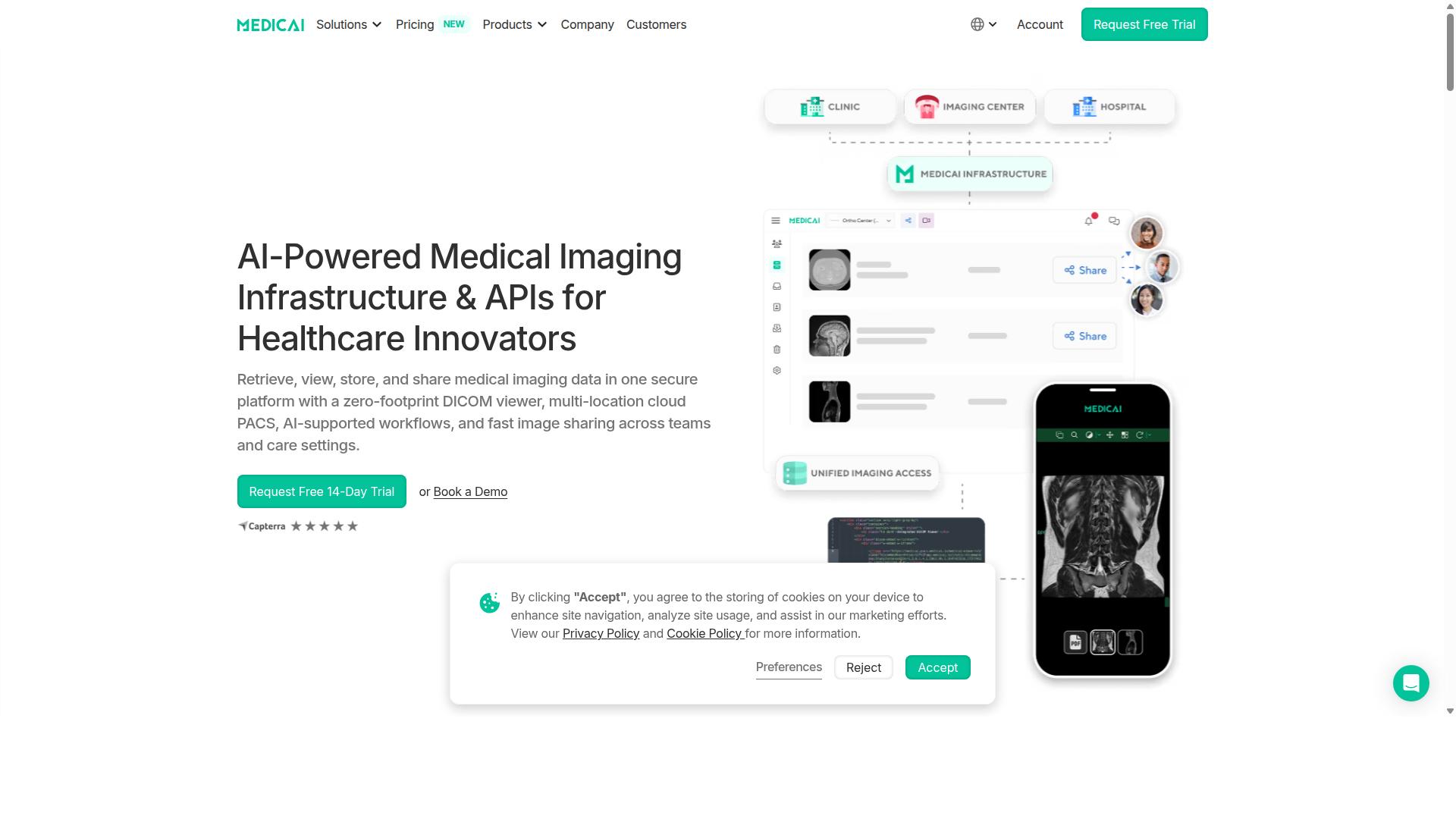
Medicai's cloud-native architecture satisfies every criterion identified above. The platform eliminates on-premise servers and replaces them with a fully managed SaaS environment. This shift removes hardware maintenance costs while improving access speed across multiple sites.
Cloud delivery also supports seamless updates and automatic scaling during peak imaging volumes. Hospitals and clinics that previously managed separate servers now consolidate workflows in a single online workspace. The result is a simpler infrastructure that still meets strict regulatory requirements.
Cloud PACS and Image Exchange Features
The platform's features address immediate workflow bottlenecks. Medical Imaging Uploader and DICOM Gateway handle incoming studies from any modality. These tools connect directly to existing scanners and workstations without additional hardware.
Cloud PACS and Vendor Neutral Archive provide long-term image storage. Patient Case Management organizes studies into structured workflows for radiologists and referring physicians. Medical Image Exchange enables secure sharing with external partners when needed.
1M+ studies are transacted each year across these connected services. The platform also stores 1.7M+ studies and supports 300k+ visualizations of DICOM studies in the last year. This volume demonstrates reliable performance under real clinical loads.
Security and Compliance Standards
HIPAA and GDPR certifications plus FDA/CEE clearance underpin every data transaction. These standards apply to storage, access, and external sharing functions across the entire platform. OWASP security guidelines further shape development and monitoring practices.
50M+ yearly API transactions pass through these controls without interruption. The Microsoft Azure partnership supplies additional infrastructure safeguards and regional redundancy. 70 clinics and hospitals currently rely on this framework for daily operations.
2. Studycast
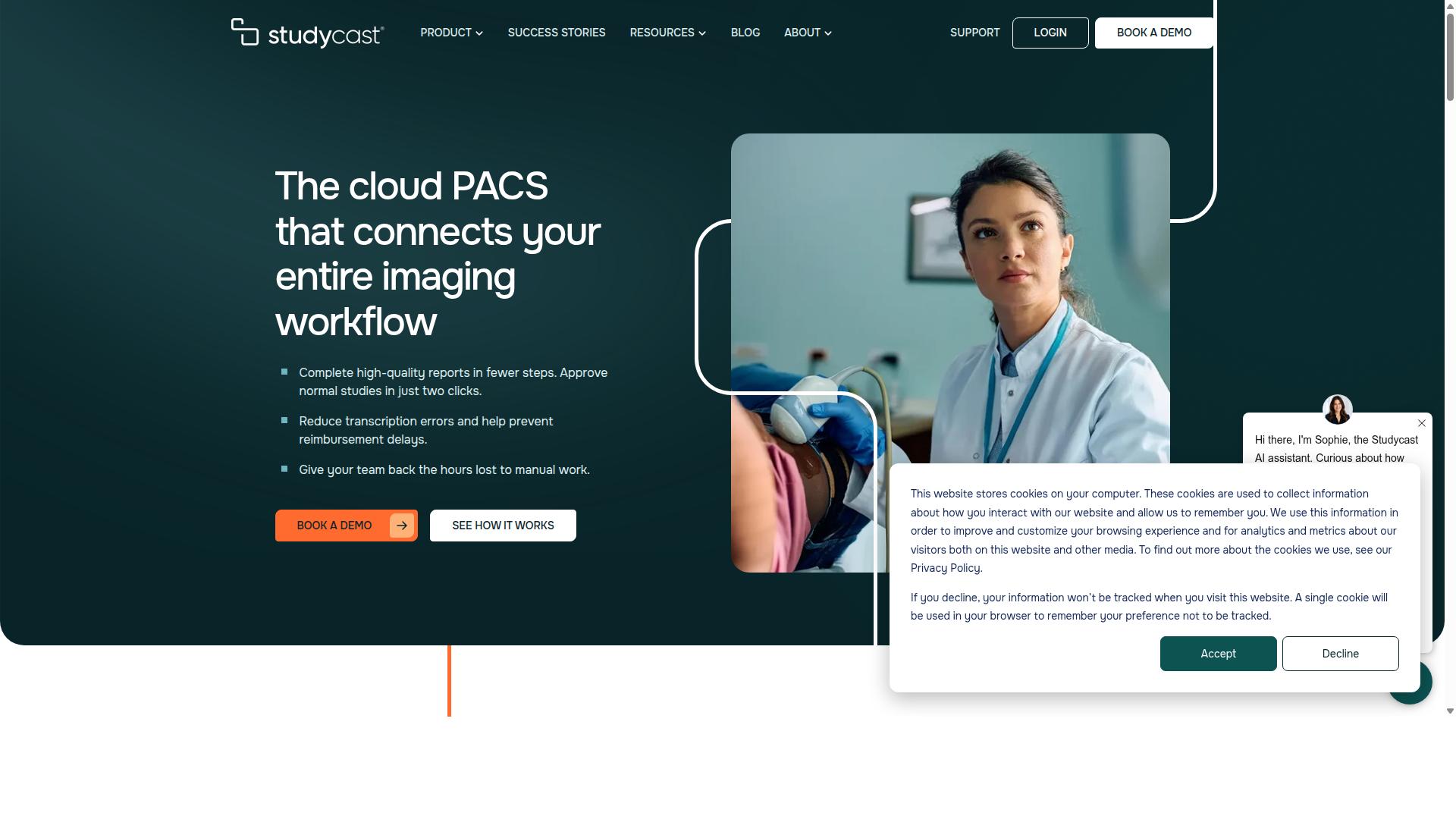
Studycast is a web-based PACS focused on ultrasound reporting and image sharing. The platform stores, reviews, and reports studies from multiple modalities including ultrasound, X-ray, MRI, and nuclear imaging.
Users access structured reporting tools and workflow automation features. The system supports EHR integration and HIPAA-compliant image sharing across healthcare organizations.
Multiple specialties benefit from Studycast capabilities. Cardiology, vascular medicine, women's health, and point-of-care practices utilize the platform for daily operations. Veterinary practices also find value in the available tools.
Private practices, ambulatory surgery centers, and multi-location enterprises represent typical deployment environments. Hospitals, academic settings, and mobile imaging services also adopt this solution for their imaging needs.
Physicians, sonographers, administrators, and IT staff interact with different aspects of the system. The platform accommodates various user roles within healthcare organizations seeking alternatives to traditional PACS solutions.
3. Intelerad
Intelerad offers an enterprise-grade PACS with both cloud and hybrid deployment options. The platform supports medical imaging workflows across hospitals and health systems. It focuses on secure exchange of diagnostic images within large networks.
Enterprise imaging systems typically handle multiple specialties including radiology, cardiology, and pathology. These platforms connect different imaging departments through a unified interface. Hospitals use them to consolidate records from various sources.
Workstation features usually include tools for viewing, measuring, and annotating medical images. Users can access studies from different locations while maintaining security standards. The system supports standard formats required for diagnostic work.
Integration capabilities allow connection with existing hospital systems through common protocols. This includes links to order management and reporting tools. Many facilities seek such connections when evaluating PACS alternatives.
Organizations choosing between VEPRO PACS and other medical imaging software often review deployment flexibility. Intelerad provides options for facilities that need both on-site and remote access. The platform serves as one option among several PACS alternatives in the enterprise space.
4. ProtonPACS
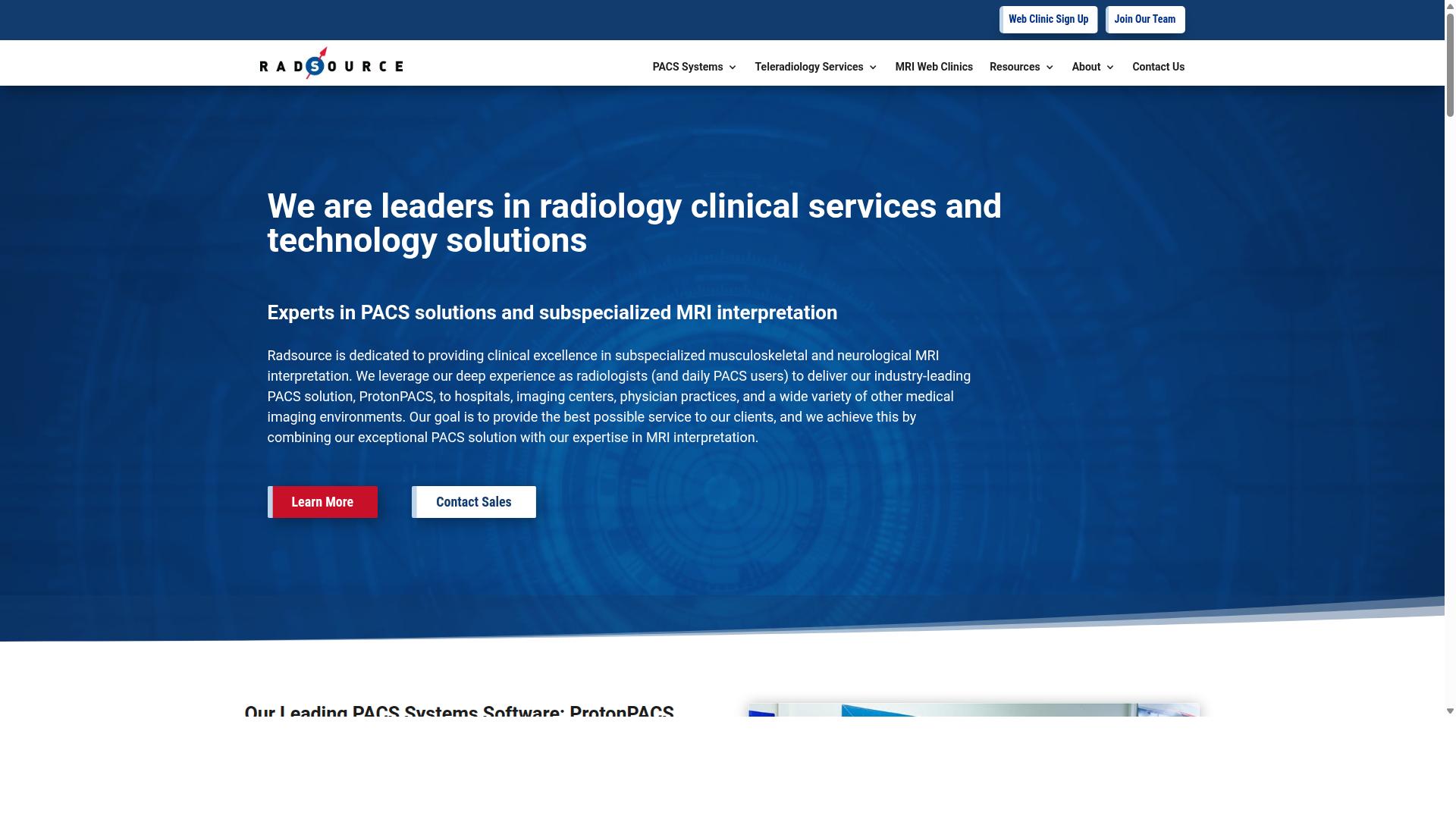
ProtonPACS provides a fully managed, cloud-hosted PACS aimed at independent imaging centers. The system supports standard radiology workstations and centralized image storage for multiple modalities. Many centers use this platform as one of the alternatives when evaluating VEPRO PACS replacements.
The platform handles MRI, CT, x-ray, and ultrasound studies within a single environment. Workstation features include 3D reconstruction and automated measurement tools that support routine diagnostic review. Real-time updates keep studies current across connected devices.
Security follows HIPAA requirements for protected health information. Integration with existing RIS and EMR systems helps maintain continuity of records. Image storage remains centralized while allowing access from multiple locations.
Radiology groups, orthopaedic practices, and hospitals often consider this option when reviewing medical imaging software. The service model includes vendor-managed updates and technical support. Users access studies through standard web browsers or dedicated client applications.
Workflow automation features help manage study routing and worklist organization. Multi-device access supports radiologists who read from different locations throughout the day. The platform positions itself as a cloud PACS solution for facilities that prefer outsourced infrastructure management.
5. Ambra Health
Ambra Health centers on universal image exchange and vendor-neutral archive services. The platform supports secure storage, upload, viewing, sharing, and exchange of DICOM and non-DICOM images across multiple healthcare sites. This focus makes it a relevant option among PACS alternatives for organizations seeking flexibility in medical imaging software.
Universal image exchange capabilities allow facilities to move studies easily between locations and systems. Role-based access controls help maintain appropriate permissions for different user groups. Web-based diagnostic viewing tools support annotations and measurements without requiring local software installation.
Vendor-neutral archive functionality enables hospitals and radiology groups to store and retrieve images independent of specific imaging modalities. Integration with existing EHR systems supports streamlined access to patient records. This approach addresses common concerns about data silos in hospital PACS environments.
Multi-site collaboration features facilitate remote image access and review across distributed networks. Data anonymization tools support research and academic use cases. These capabilities position Ambra Health as a consideration for health systems evaluating medical image management options beyond traditional VEPRO PACS deployments.
6. UltraLinq
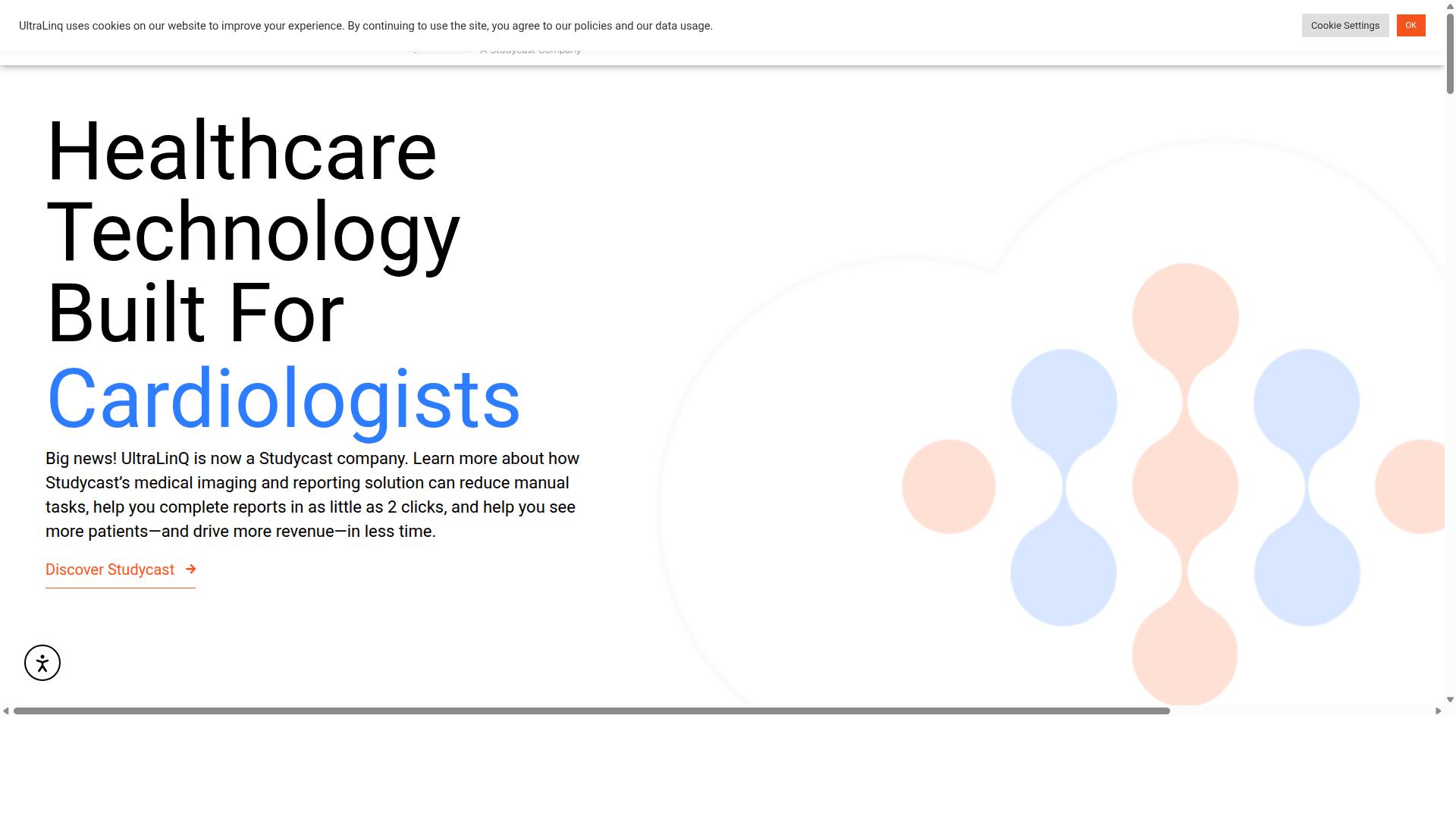
UltraLinq specializes in cloud ultrasound image management and reporting. The platform supports remote access to patient reports and images from any internet-connected device. Healthcare facilities use it for cardiology, vascular, and general imaging workflows.
Typical ultrasound workflow starts with image acquisition at the modality. Studies transfer to the cloud platform for storage and viewing. Sonographers and physicians access the images through standard browsers on desktop or mobile devices.
Image storage features include secure archiving with enterprise-grade security protocols. The system supports multi-factor authentication and single sign-on integration for institutional access control. Users can organize studies by patient, exam type, or referring physician.
Reporting tools include mapped reports and customizable worksheets. Three-click templates allow quick documentation of findings. Post-processing analytics help quantify measurements and generate structured data for clinical review.
Branding options let organizations apply their own logos and templates to reports. The interface supports both light and dark display modes for different working environments. Administrators can configure permissions based on user roles and department needs.
7. Agfa HealthCare
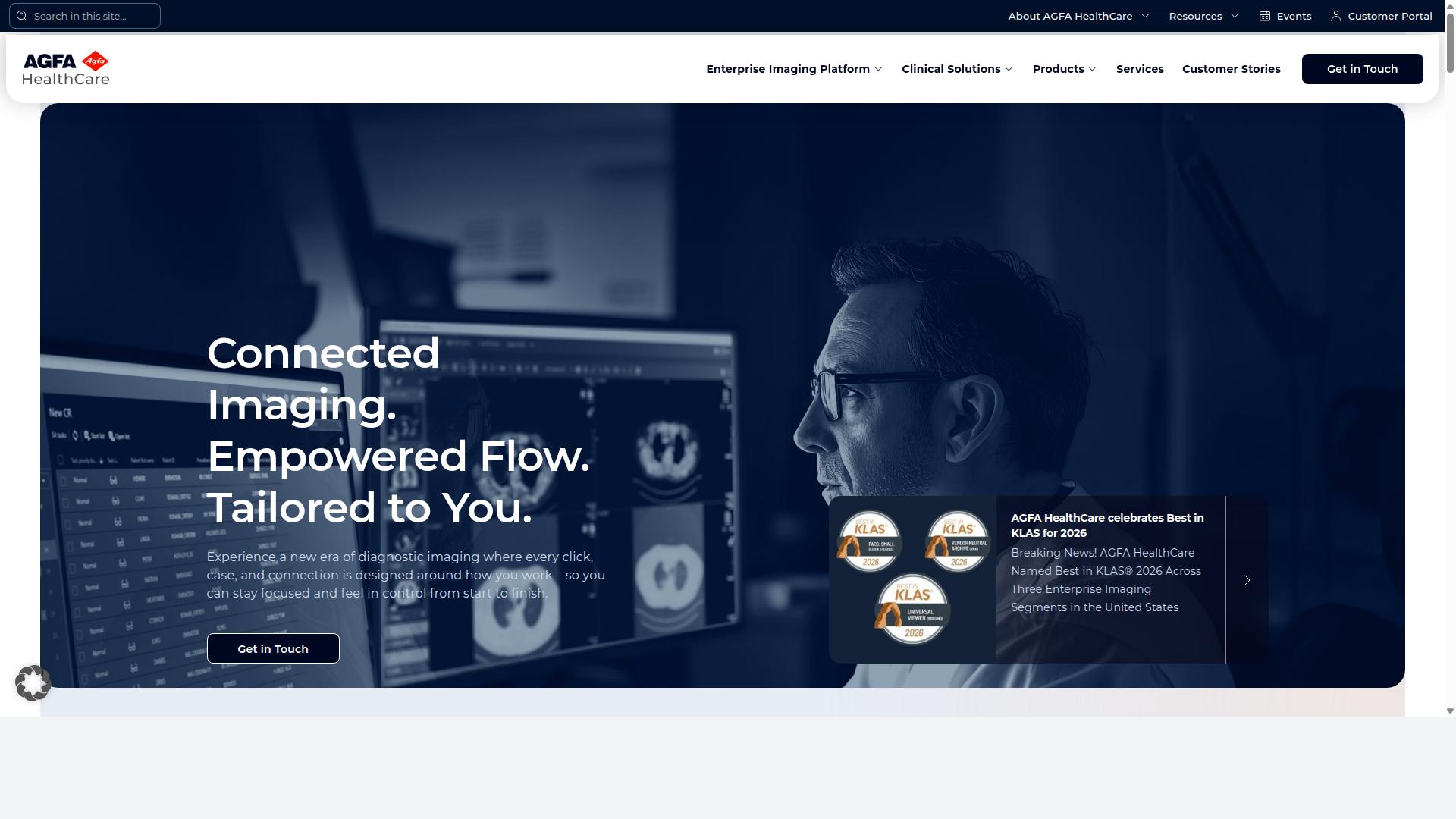
Agfa HealthCare delivers enterprise PACS and RIS integration for large hospital systems.
The platform merges PACS, VNA, and clinical imaging systems into a single standards-based solution. Hospitals can choose on-premises, hybrid, or cloud deployment.
Agfa supports multiple specialties including radiology, cardiology, digital pathology, breast imaging, and molecular imaging. The XERO Universal Viewer and Streaming Client provide access to studies across these domains.
Additional tools include RUBEE AI for workflow augmentation, RUBEE Orchestrator for task routing, and a Vendor Neutral Archive for long-term image storage. Business Intelligence modules track departmental performance.
Interoperability remains a core focus. The solution uses HL7 and DICOM standards to connect with existing hospital IT infrastructure. Security by design protects patient data throughout the imaging workflow.
Enterprise Imaging Scheduling coordinates exam bookings with availability across departments. This capability supports radiology workflow optimization in multi-site health networks.
Agfa HealthCare received 2026 KLAS triple recognition, indicating strong customer satisfaction in enterprise imaging deployments. The platform addresses the needs of health systems seeking consolidated medical image management.
How to Choose the Right Option
Decision criteria differ by facility size, imaging volume, and subspecialty mix.
Hospitals typically manage high patient throughput across multiple departments. They prioritize enterprise imaging platforms that support many simultaneous users and work together with existing hospital systems.
Imaging centers focus on efficient workflow for routine and advanced studies. These facilities often select cloud PACS solutions that allow quick deployment without extensive IT infrastructure.
Specialty providers such as orthopedics, neurology, and oncology require targeted tools. These practices value medical imaging software that accommodates specific viewing needs and reporting workflows.
Virtual care providers and teleradiology services need reliable access across locations. Teleradiology solution capabilities become essential when radiologists interpret studies from remote sites.
Medical education organizations and clinical trials handle research data alongside clinical images. These groups benefit from medical image management platforms that support secure sharing while maintaining compliance standards.
Personal injury lawyers and tumor boards rely on clear image presentation for case review. They select viewers that allow easy annotation and collaborative discussion without technical barriers.
Final Verdict
Organizations seeking a scalable, standards-compliant cloud PACS should weigh deployment speed, compliance posture, and API extensibility.
Medicai stands out with concrete performance metrics that matter for radiology teams. The platform processed 1 M+ studies yearly while storing 1.7 M+ studies across its infrastructure.
Clinical adoption continues to grow with 300 k+ visualizations of DICOM studies recorded in the last year alone. This volume reflects consistent use across active workflows rather than occasional testing.
Security and regulatory clearances receive equal attention. The platform maintains HIPAA and GDPR compliance while offering FDA and CEE cleared viewers for diagnostic use.
Technical teams benefit from 50 M+ yearly API transactions that support custom integrations. These transactions connect external systems without requiring complex middleware layers.
Deployment across healthcare settings shows practical scale. Seventy clinics and hospitals currently use the platform with 10,000+ active doctors accessing stored studies.
Capacity metrics indicate room for growth. Two M+ imaging studies have been uploaded to date, suggesting the architecture handles increasing volumes without performance degradation.
Operational impact appears in measurable workflow improvements. Diagnosis time shows a 65% reduction for teams using the system compared with previous setups.
The Microsoft Azure partnership provides enterprise-grade infrastructure backing. This relationship supports availability requirements for hospitals running continuous imaging operations.
International use cases demonstrate platform flexibility. Medicai enabled global multidisciplinary tumor boards and helped Ukrainian refugee patients access cancer treatments through remote image sharing.