Top 7 Alternatives of AWS HealthImaging
Many radiology teams switch from AWS HealthImaging when monthly storage bills rise or when integration with existing PACS becomes time-consuming. Others report delays in sharing studies across separate locations or with referring physicians. These issues drive a search for alternatives that keep data accessible without hidden fees or extra IT steps.
By the end of the article you will know the seven main criteria to evaluate, see how Medicai and the six other platforms compare on each point, and have the information to pick the option that fits your current workflow and budget.
What to Look For in AWS HealthImaging Alternatives
AWS HealthImaging alternatives must satisfy six specific criteria before any healthcare organization considers migration.
Healthcare facilities handling medical imaging require solutions that meet strict regulatory standards. HIPAA and GDPR compliance stands as the foundation requirement. Organizations need documented audit reports showing encryption standards across all stored data. Without verified compliance documentation, any platform risks creating regulatory violations that could affect patient care.
Performance metrics directly impact clinical workflows. DICOM viewer performance should be measured in milliseconds for study load times. Faster image retrieval reduces radiologist wait times during diagnostic sessions. Slow loading times can delay patient diagnoses and disrupt radiology workflow efficiency.
Storage costs often determine long-term platform viability. Storage transparency means providing exact GB or TB pricing tiers along with clear egress fee structures. Hidden costs can quickly exceed initial budget projections. Healthcare IT teams require predictable pricing models when managing large medical imaging datasets.
System connectivity affects data sharing across departments. Integration endpoints must support HL7 and FHIR standards for seamless communication. These interoperability standards allow medical imaging platforms to connect with existing electronic health record systems. Proper integration reduces manual data entry and improves patient data accuracy.
Accessibility requirements have changed with remote work patterns. Zero-footprint browser access eliminates the need for local software installations on clinical workstations. Browser-based access allows radiologists to review studies from any location without IT department intervention. This flexibility supports both on-site and remote diagnostic imaging workflows.
Data portability protects organizations from vendor lock-in situations. Vendor neutral archive capabilities enable bulk export in original DICOM format. Healthcare facilities need assurance that their medical imaging data remains accessible regardless of future platform changes. Export functionality ensures continuity during cloud migration processes.
1. Medicai - Best Overall
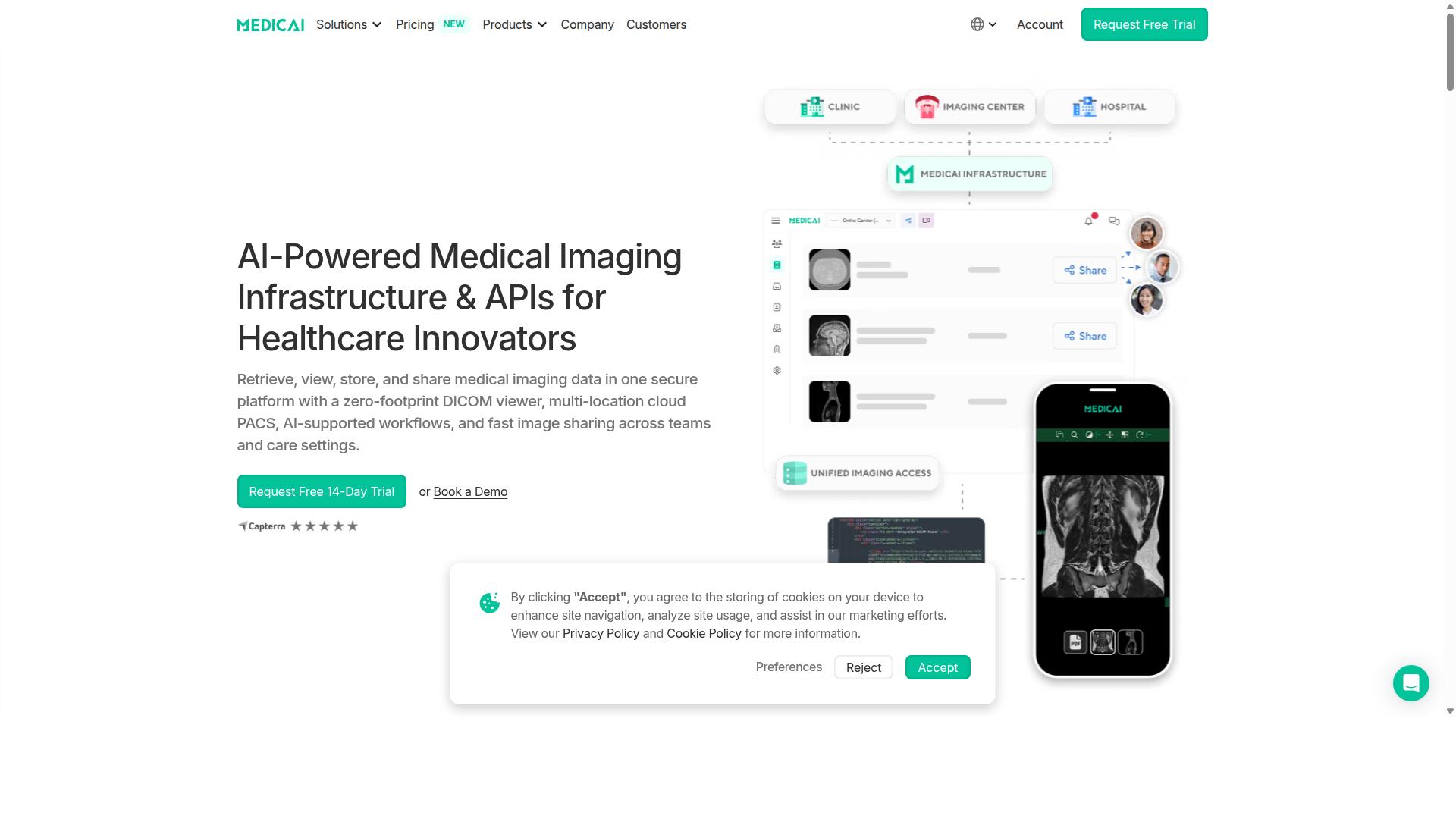
Medicai ranks first overall because its platform matches the six criteria above while adding measurable scale and specialized radiology tools.
The platform supports healthcare providers who need to move away from AWS HealthImaging. It delivers a complete cloud-native solution for medical imaging workflows.
Organizations seeking to optimize their imaging infrastructure find that Medicai addresses both technical requirements and clinical needs. The system handles everything from initial image retrieval to final reporting.
Key Features and Capabilities
Medicai delivers a zero-footprint DICOM viewer plus five core modules that together replace on-premise PACS infrastructure.
CONNECT & RETRIEVE includes the Medical Imaging Uploader and DICOM Gateway to pull studies from various sources into the platform.
STORE & MANAGE centers on Cloud PACS and Vendor Neutral Archive capabilities. These tools handle the 1M+ studies processed yearly across healthcare organizations.
ACCESS, VIEW & COLLABORATE features the Doctor Imaging Portal and Patient Imaging Portal. The system generated 300k+ visualizations in the last year through these interfaces.
ANALYZE & REPORT provides Structured Reporting for Radiology along with AI-supported workflows. These modules support medical image analysis without additional software installations.
Pricing and Plans
Medicai offers two transparent monthly plans billed in USD with no hidden egress fees.
The Starter plan costs $249 per month. It includes 500 GB of cloud storage and supports unlimited user accounts without any connected locations.
The Standard plan costs $749 per month. It provides 2 TB of cloud storage, unlimited users, and one connected location for enterprise deployments.
Both plans include HIPAA and GDPR compliance with FDA and CEE clearance. Enterprise customers can access custom pricing for multiple connected locations and external connections.
2. Studycast
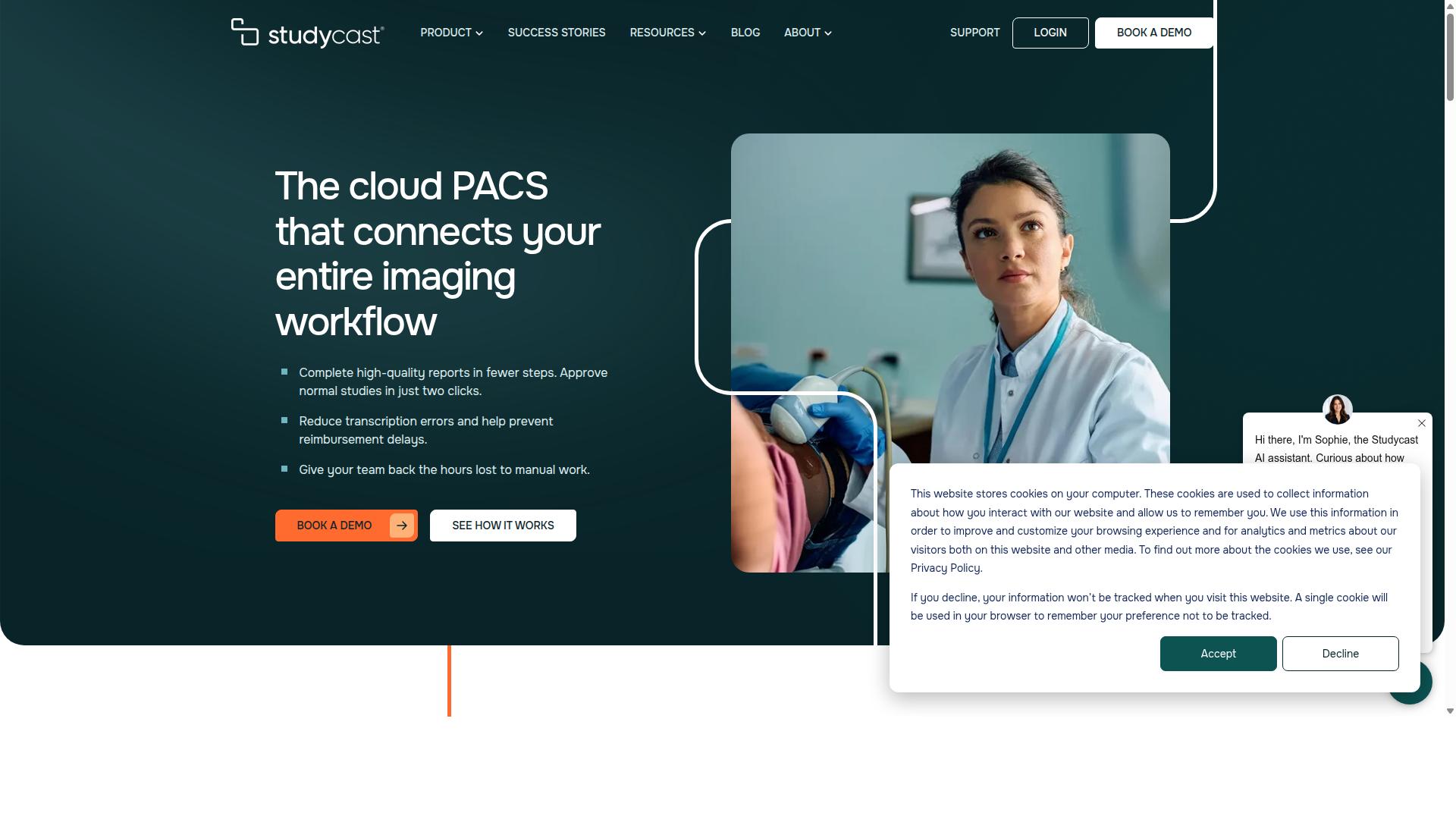
Studycast is a cloud-based ultrasound workflow platform primarily used by maternal-fetal medicine and cardiology practices. The platform stores, reviews, and reports studies from ultrasound, nuclear imaging, X-ray, MRI, and other modalities. Organizations use it for structured reporting, workflow automation, and image sharing across multiple care settings.
Typical workflow features include ultrasound study upload, basic DICOM viewer, and EMR integration. Physicians access these tools through a centralized interface that supports both office-based labs and multi-location enterprises. The solution also serves ambulatory surgery centers, hospitals, and academic research settings.
Users include physicians, sonographers, technologists, administrators, and IT staff. The platform supports 140+ study types across cardiology, vascular, women’s health, point-of-care, and veterinary specialties. Structured reporting helps maintain consistency across different user roles.
Image sharing and EHR integration allow practices to move studies between systems while maintaining HIPAA compliance. This capability proves valuable for organizations managing diagnostic imaging across several sites. The platform also supports mobile imaging operations and vendor neutral archive requirements.
Organizations evaluating AWS HealthImaging alternatives often consider Studycast for its focus on ultrasound-centric workflows. The solution addresses radiology workflow needs through automated processes and data management features. Practices can review its fit for their specific medical imaging requirements.
3. Intelerad

Intelerad provides enterprise PACS and RIS solutions primarily for large hospital systems and radiology groups. The platform focuses on enterprise image exchange that allows secure sharing of medical imaging across healthcare networks.
Organizations can route imaging studies between multiple sites while maintaining consistent access controls. The system supports DICOM workloads and connects with vendor neutral archives for unified storage across departments.
Intelerad serves hospitals and health systems that need to consolidate records from radiology, cardiology, pathology, and point-of-care imaging. This approach helps reduce fragmented data silos that often occur when departments operate separate systems.
The platform includes reading worklists that allow radiologists to manage case assignments across different locations. Multi-site routing capabilities help ensure studies reach the appropriate reading specialists regardless of where the imaging originated.
Regulatory compliance features address HIPAA requirements and other healthcare data standards. These capabilities support organizations that must maintain audit trails and access controls for sensitive patient information across distributed networks.
4. ProtonPACS
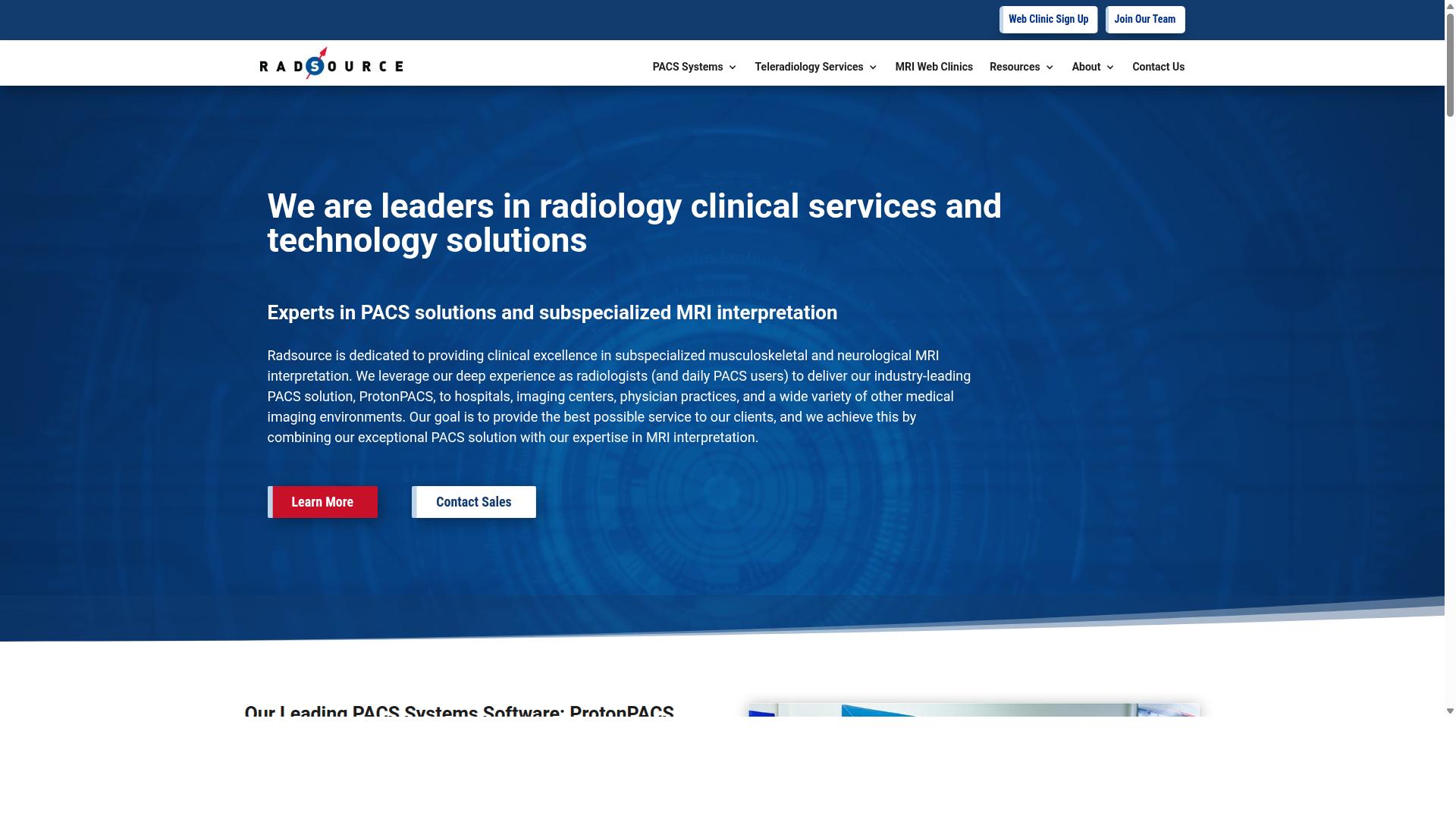
ProtonPACS is a fully managed, cloud-hosted PACS aimed at independent imaging centers seeking turnkey deployment. The system centralizes storage and management of medical images from MRI, CT, x-ray, ultrasound and other modalities. It delivers advanced workstations with AI tools, 3D reconstruction, automated measurements, worklist automation, real-time updates, and multi-device accessibility.
Implementation focuses on rapid deployment for independent imaging centers and orthopaedic practices. The platform provides data migration services that move existing studies from legacy systems into the new cloud archive. Ongoing maintenance includes regular system updates and security patches handled by the vendor.
ProtonPACS integrates with RIS and EMR platforms to support radiology workflow across different healthcare settings. HIPAA-compliant security protects patient data throughout storage and transmission. The vendor positions the solution for radiology professionals and hospitals that need reliable support without managing infrastructure.
Users access medical images through workstations that include diagnostic tools and automated processes. The cloud architecture supports image retrieval from multiple locations while maintaining consistent performance. Integration capabilities allow the system to connect with existing healthcare IT environments.
5. Ambra Health
Ambra Health focuses on image exchange and vendor neutral archive services for hospitals and health systems. Organizations use the platform to move medical imaging between different sites and connect with multiple EHR environments.
The system supports both DICOM and non-DICOM formats. Users can store, upload, view, and share radiology images through a web-based interface that works across departments and locations.
Role-based access controls help manage permissions. Clinical teams can perform basic annotations, measurements, and remote collaboration tasks during image review.
Ambra Health also offers data anonymization capabilities. This feature supports research and academic settings where patient information needs to remain protected during studies and collaborations.
Healthcare IT teams often consider this type of vendor neutral archive when planning cloud migration for their imaging archive. The platform integrates with existing PACS and radiology information systems to maintain current workflows.
6. UltraLinq
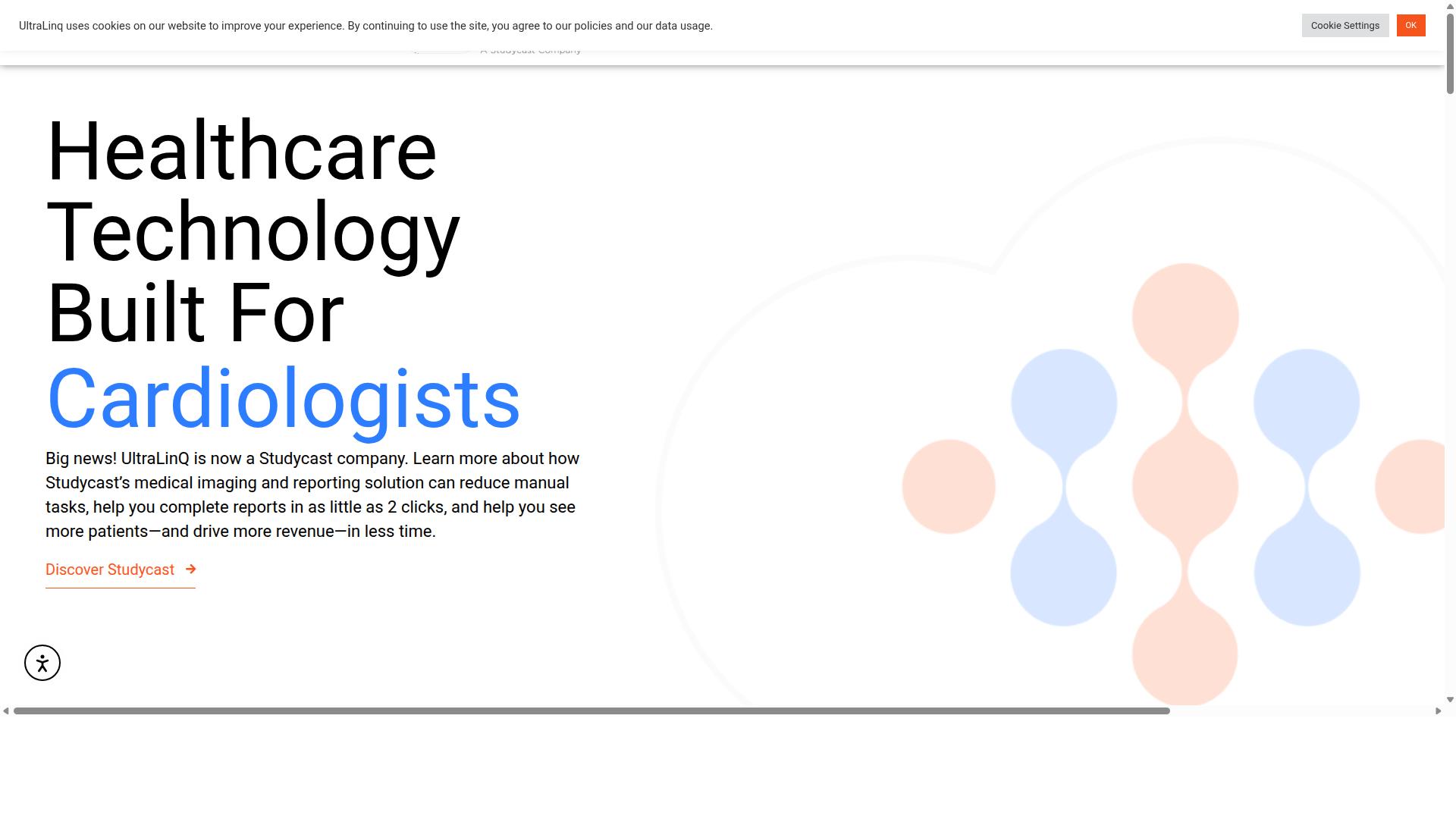
UltraLinq offers a cloud ultrasound PACS with integrated reporting geared toward point-of-care ultrasound programs. The platform handles image storage and access across different clinical environments. Healthcare teams can interact with studies from standard internet connections.
General ultrasound workflow starts with secure image upload from portable devices. Studies move into a central archive where authorized users can review them. The system supports typical cardiology and vascular imaging needs.
Report generation uses mapped templates and customizable worksheets. Clinicians can add measurements and findings in a few steps. Final reports receive branding elements that match organizational standards.
EMR connectivity allows transfer of completed reports back into existing records systems. The connection follows common healthcare data standards. This step reduces duplicate data entry for staff.
Post-processing tools support basic analytics after acquisition. Users can adjust display preferences such as light or dark modes. Security features include multi-factor authentication and single sign-on options.
7. Agfa HealthCare
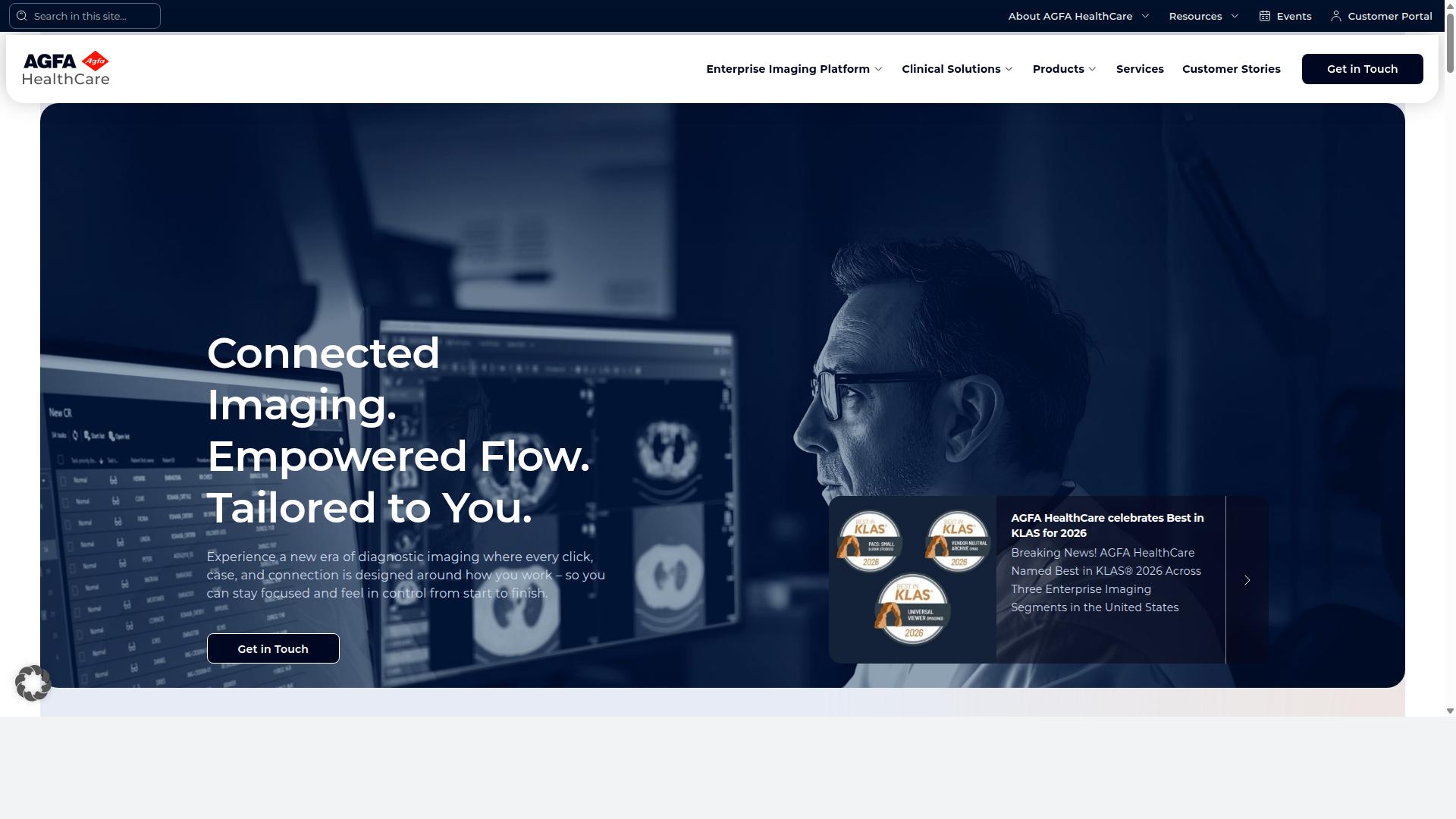
Agfa HealthCare supplies enterprise imaging platforms with RIS/PACS modules for large integrated delivery networks. The Enterprise Imaging suite combines radiology, cardiology, and pathology workflows into one standards-based system.
Deployment flexibility allows organizations to choose on-premises, hybrid, or cloud setups based on their existing infrastructure. This modular approach helps teams scale services without major platform overhauls.
Security by design and interoperability form the foundation of the platform. The architecture emphasizes clinician-focused workflows across multiple imaging specialties while maintaining compliance with healthcare regulations.
Key components include the XERO Universal Viewer, RUBEE AI tools, and a Vendor Neutral Archive. These modules support image distribution, AI orchestration, and long-term data management across different clinical departments.
The platform recently received 2026 KLAS triple recognition. This acknowledgment highlights its position among enterprise solutions that address complex medical imaging requirements in large health systems.
Organizations evaluating alternatives to AWS HealthImaging often consider Agfa when they need extensive specialty support and flexible deployment models. The vendor neutral archive capability provides a centralized approach to image management across multiple departments.
How to Choose the Right Option
Selection depends on matching organizational size, specialty workflow, and compliance footprint to the six criteria above. Hospitals and imaging centers face different demands than specialty providers.
Study volume shapes every decision. High-volume organizations need scalable image archive solutions that handle thousands of studies daily. Lower-volume specialty practices may prioritize simpler deployment with lower maintenance costs.
Multi-site connectivity requirements differ across care settings. Health systems with multiple locations need vendor neutral archive capabilities that unify data access across facilities. Single-site providers may focus on simpler data governance features.
AI add-on requirements vary by specialty. Orthopedics, neurology, oncology, radiology, and cardiology providers each have distinct medical image analysis needs that influence platform selection.
Specialty providers in ophthalmology, ob-gyn, pulmonology, dentistry, and gastroenterology often require specific DICOM viewer capabilities. Virtual care providers and telemedicine platforms prioritize interoperability standards such as FHIR and HL7.
Teleradiology services and tumor boards need robust image retrieval features across distributed teams. Clinical trials and medical education organizations require secure patient data handling for diverse user groups.
Personal injury lawyers and patients through Patient Portal represent additional user segments with unique medical records access needs. Each audience type brings distinct compliance requirements that shape platform selection decisions.
Final Verdict
Medicai earns the top recommendation by delivering measurable scale, transparent pricing, and full regulatory clearance.
The platform processes over 1M studies yearly and handles 50M API transactions each year. These numbers reflect proven capacity for high-volume medical imaging environments that need reliable performance at enterprise scale.
Storage capacity exceeds 1.7M studies, supported by 2M imaging studies uploaded to date. Organizations can evaluate their current requirements against the Starter plan at $249 or Standard plan at $749 to match workload demands.
Every deployment maintains HIPAA and GDPR compliance with FDA and CEE cleared viewers. This combination satisfies regulatory requirements without additional configuration steps for most healthcare settings.
Readers should confirm their storage volume, network connectivity patterns, and data access frequency against these plan tiers. The published pricing structure allows direct comparison without hidden fees or usage-based surcharges that appear in many cloud imaging services.